
NHS North West Genomics
2.2.0 - ci-build

NHS North West Genomics
2.2.0 - ci-build
NHS North West Genomics - Local Development build (v2.2.0) built by the FHIR (HL7® FHIR® Standard) Build Tools. See the Directory of published versions
LAB-35/LAB-36)A genomic/molecular test that follows on from a pathology result - typically a tumour biopsy where the histology findings indicate that genomic testing is now needed (e.g. to identify a targetable mutation). Rather than the referring clinician placing a separate genomics order, the pathology laboratory reflexes the sample onward for genomic testing.
LAB-1/LAB-3.)LAB-35/LAB-36, or a separate LAB-1.)LAB-3.)flowchart LR
A[Pathology test ordered<br/>e.g. biopsy] --> B[Sample taken]
B --> C[Pathology<br/>testing]
C -->|Reflexed if indicated| D[Genomic<br/>testing]
C --> E[Report reaches<br/>clinician]
D --> E
E --> F[Diagnosis and<br/>treatment planning]
LAB-35/LAB-36) or placed directly by the clinician (LAB-1) - both must be supported, see the Transactions table below.| IHE Actor | Role | System (example) |
|---|---|---|
| Order Placer | Referring clinician | MFT EPIC |
Order Filler (receiving LAB-1) / Requestor (ILW, if sending LAB-35) |
Pathology laboratory | MFT EPIC Beaker or CFT Shire |
| Order Filler / Subcontractor (ILW, if reflexed) | Genomics laboratory | iGene |
| Transaction | Description | Direction |
|---|---|---|
LAB-1 |
Laboratory Order (Pathology) | Order Placer → Order Filler (Pathology) |
LAB-3 |
Laboratory Report (Pathology) | Order Filler (Pathology) → Order Placer |
LAB-1 |
Laboratory Order (Genomics, if placed directly by Order Placer) | Order Placer → Order Filler (Genomics) |
LAB-35 |
Genomic Reflex Order (if placed by Pathology) | Order Filler (Pathology) → Order Filler (Genomics) |
LAB-36 |
Genomic Report (reflex) | Order Filler (Genomics) → Order Filler (Pathology) |
LAB-3 |
Laboratory Report (Genomics, either path) | Order Filler (Genomics or Pathology) → Order Placer |
graph TD;
    subgraph Pathology["Pathology - Greater Manchester ICS"]
        OrderPlacer[Order Placer<br/>e.g. MFT EPIC] --> |"1. Sends Laboratory Order (Pathology)<br/>ORM_O01 or OML_O21"| OrderFiller["Order Filler (Pathology)<br/>e.g. MFT EPIC Beaker or CFT Shire"]
        OrderPlacer --> |"2. Asks for (Orders)"| SpecimenCollection
        SpecimenCollection[Specimen Collection] --> |3. Sends Specimen| OrderFiller
        OrderFiller --> |4. Send Laboratory Report<br/>ORU_R01| OrderPlacer
    end
    subgraph Genomics["Genomics - North West Region"]
      OrderPlacerG["Order Placer (Pathology)"] --> |5. Send Laboratory Order<br/>OML_O21| OrderFillerG["Order Filler (Genomics)<br/>e.g. iGene"]
      OrderPlacerG --> |6. Sends Specimen| OrderFillerG
      OrderFillerG --> |7. Sends Laboratory Report<br/>ORU_R01| OrderPlacerG
    end

    OrderFiller --> OrderPlacerG
    OrderFiller --> |8. Sends Laboratory Report<br/>ORU_R01| OrderPlacer
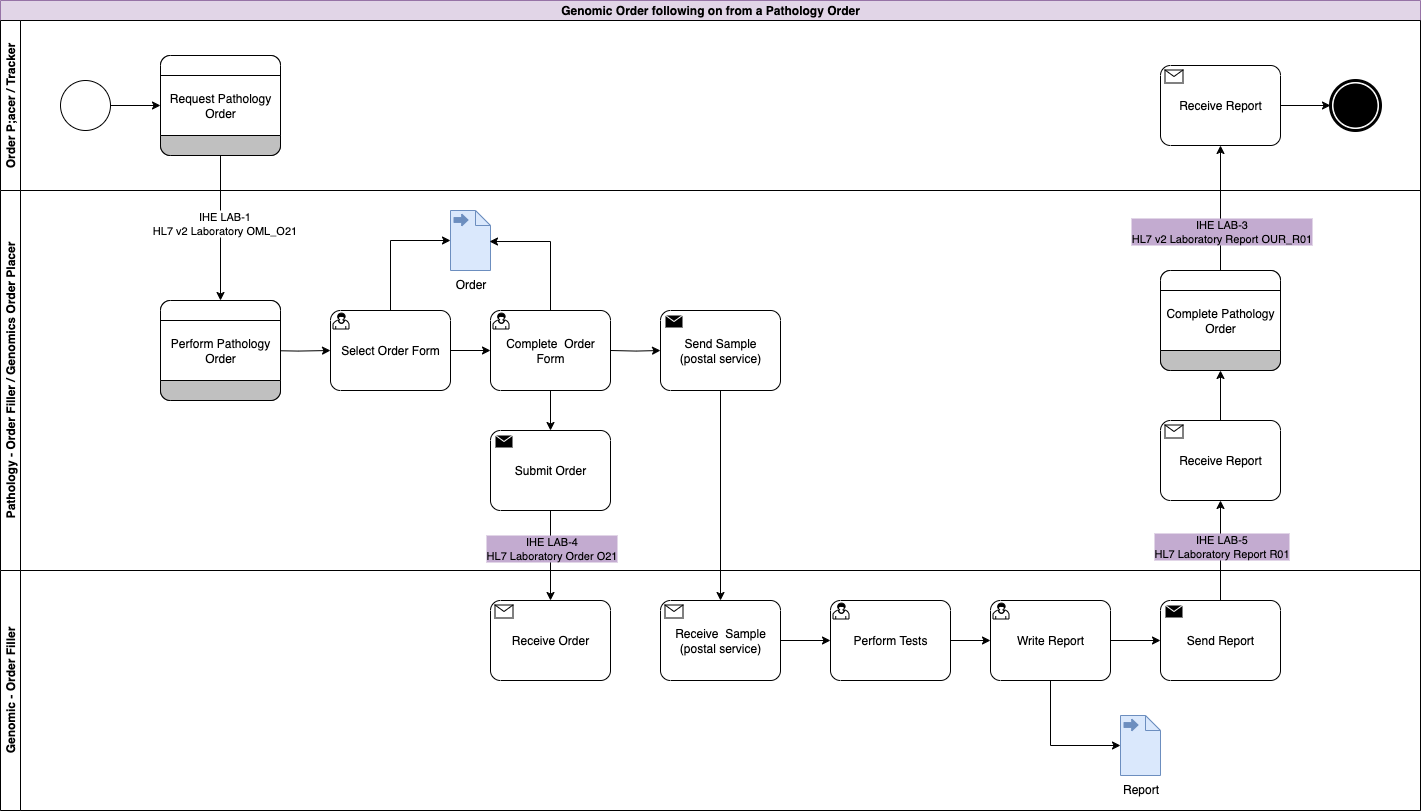
Genomic LTW Business Process - Use Case 3
In this use case the original order is raised by the Order Placer and sent to a Pathology LIMS (Pathology Order Filler). The Pathology LIMS follows the processes outlined in Process Flow: Genomic Test Order and Process Flow: Genomic Test Report for pathology testing.
As part of this testing, the clinical process requires a genomics test to be performed.
This genomics process is largely the same except for:
sequenceDiagram


participant EPR as Order Placer
participant LIMSP as Order Filler (Pathology)
participant LIMSG as Order Filler (Genomics)


EPR ->> LIMSP: Submit Laboratory Order O21 (LAB-1)

LIMSP -->> LIMSP : Performs Test

opt Order Filler (Pathology) creates Genomic Order

    note over LIMSP,LIMSG: Same specimen can be reused for multiple tests

    LIMSP ->> LIMSG: Submit Genomic Reflex Order O21 (LAB-35)
    LIMSP -->> LIMSG: Send Specimen (not a technical interaction)
    LIMSG ->> LIMSP: Send Genomic Report R01 (LAB-36)
end

LIMSP ->> EPR: Send Laboratory Report R01 (LAB-3)
This use case can often occur around cancer - see Cancer Background Information for Use Cases for the Colorectal Cancer diagnostic pathway example.
Rather than always duplicating pathology content in full into the genomic
reflex order/message, the LAB-35 reflex order from Pathology could carry
just enough to identify the pathology data it relates to - e.g. a Pathology
Order Filler Number, Pathology Patient Identifier and/or Pathology Specimen
Identifier, the same reference-based direction proposed on Cancer Test
Additional Ask At Order Entry
Questions's own
Pathologist / Pathology hospital fields. If the Order Filler (Genomics)
then finds it needs more pathology detail than the reflex order itself
carries, it can use Resource Exchange
(PCC-44) to query the Resource Access
Provider on demand, rather than requiring Pathology to push everything
up front - the same pattern NHS England Genomic Order Management Service
(GOMS) already uses.
sequenceDiagram
    participant LIMSP as Order Filler (Pathology)
    participant LIMSG as Order Filler (Genomics)
    participant Provider as Resource Access Provider

    LIMSP ->> LIMSG: Submit Genomic Reflex Order O21 (LAB-35)
    opt Pathology detail in the reflex order is insufficient
        LIMSG ->> Provider: Resource Exchange (PCC-44) query - e.g. by<br/>Pathology Order Filler Number/Patient/Specimen identifier
        Provider -->> LIMSG: Respond with pathology resources<br/>(e.g. DiagnosticReport, Observation)
    end
    LIMSG -->> LIMSG: Performs genomic test
    LIMSG ->> LIMSP: Send Genomic Report R01 (LAB-36)
This keeps the reflex order itself lightweight while still letting genomics pull whatever additional pathology detail it needs, on demand, rather than the pathology LIMS/genomics order needing to anticipate and carry every field a downstream test might require.
LAB-1 placer orders and LAB-35 reflex sub-orderLAB-3/LAB-36 reportsNo example resources are published yet for this scenario.
Includes:
No Developer Guides notebook covers this use case yet.